
Introduction to classical drawing

It all starts with drawing.
It is often said that one can be a great draftsman but a poor painter, yet it is impossible to be a great painter of realism without first being a skilled draftsman.
Drawing is the foundation of representational art, and its importance cannot be overstated. The ability to accurately observe and record proportions and values is an essential skill for artists of all levels, regardless of medium or subject matter.
This workshop focuses on providing students with valuable tools and techniques for approaching drawing more effectively and efficiently. The course is designed to help artists develop a strong foundation of knowledge and practical skills upon which to build their future artistic development.


Students will complete a series of small projects, each designed to strengthen a particular aspect of their observational and drawing abilities. As the course progresses, students will be introduced to increasingly challenging concepts, building upon the skills and knowledge developed in previous lessons.
The workshop begins with an investigation of linear drawing. Students will explore various methods for establishing accurate proportions, working initially from master drawings before progressing to still-life arrangements.
The course then transitions into a study of mass drawing, focusing on the organization of values to create a convincing effect of light and the illusion of three-dimensional form and space. Students will work from simple objects as well as classical plaster casts.
Toward the end of the workshop, students will be introduced to the fundamentals of portraiture and figure drawing, working from master drawings and photographic references.
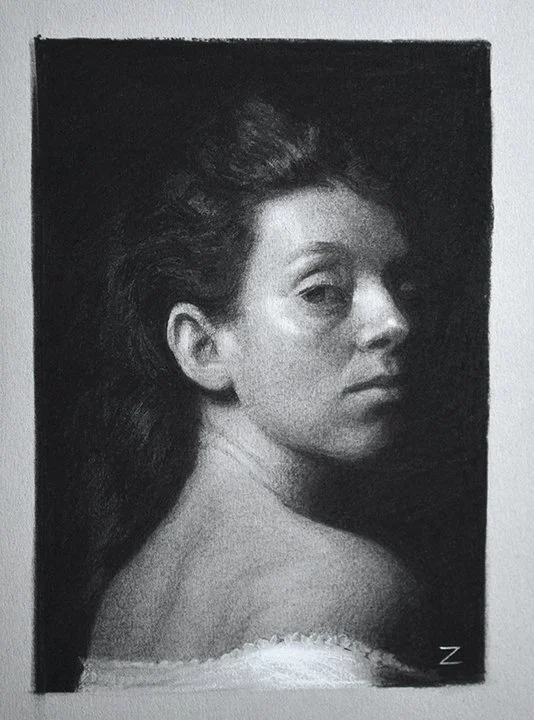

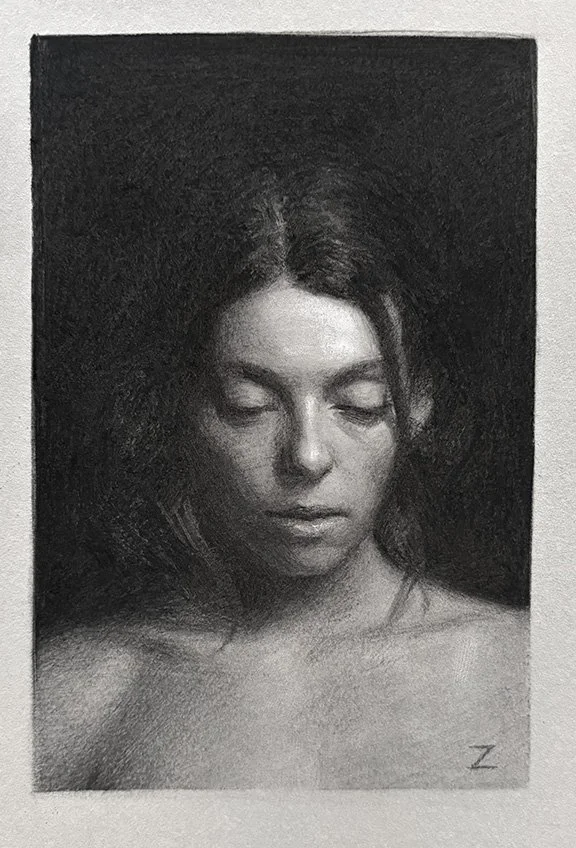


topics Covered During the Workshop
Working with pencil, charcoal, white chalk, and toned paper.
Measuring techniques for achieving accurate proportions.
Linear drawing and methods for mapping out an image.
Mass drawing and blocking in a full range of values.
Identifying and organizing light and shadow shapes.
Understanding edge variety and its role in creating form.
Values, value compression, value keying, and the importance of value relationships within a composition.
Creating a convincing effect of light and a sense of atmosphere.
An introduction to portraiture.
An introduction to figure drawing.
Who Should Attend
Artists of all skill levels are welcome. This workshop is an excellent starting point for beginners, as well as an opportunity for more experienced artists to revisit and strengthen their fundamental drawing skills.
The course structure allows for a substantial amount of one-on-one instruction, ensuring that students at every level receive the individual guidance they need to improve their work.
Instruction is provided through lectures, live demonstrations, individualized critiques, instructional handouts, and practical exercises in which students work alongside the instructor.
I hope you can join us!
DETAILS

May 1st to May 30th
10, 3 hour classes
Saturdays and Sundays from 9AM-12
This is the workshop we recommend to all new students, as it provides the strongest foundation for future study at ZAFA. Through master copies, still life, portraiture, and figure drawing, you’ll learn essential techniques for proportion, value, light, and form. Each project is designed to sharpen your eye, strengthen your skills, and build confidence as you progress. Open to all levels, this course is the ideal first step for anyone looking to grow as an artist.
Enrollment is confirmed upon completion of payment
“Excellent handouts, lectures …etc. It was good to have the teacher doing the projects alongside the class and discussing the various stages with us.”
“I appreciated the carefully planed lessons, the individual attention and tutoring, and the expertise of the instructor.”
“As an absolute beginner I found ZAFA approach easy to follow and my progress with drawing developed so much faster than I expected. Loved every single minute of classes. William is a great teacher! He is always there to help and to support during the learning curve. After finishing the first workshop, I signed up for the next one right away :) Can’t wait to be back.”